


In spite of its small Muslim population, South Africa has emerged as one of the largest producers of halal products worldwide. This is largely due to its strategic access to the rest of the African continent and the presence of highly advanced halal certification programmes. Impressively, 60 per cent of all products in South Africa’s retailers are certified halal. Driven by rapid urbanization and expanding cold-chain capacity, South Africa aims to continuously scale its halal-certified exports and reinforce its position as the premier gateway to Africa’s halal food and beverage market.
The global halal ingredients market is booming, with its size evaluated at $99.71 billion in 2026 and expected to reach $196.84 billion by 2035. This places South Africa in a lucrative position to supply certified meat and food products across the Southern African Development Community (SADC) and beyond.
Halal Travel
Halal travel in Africa offers immense growth potential for the tourism industry. Muslim tourists globally represent a major, affluent niche market with a young demographic that is increasingly asserting its unique needs within the travel, tourism, and hospitality sectors.
Tanzania, Zanzibar, and South Africa remain the most popular African destinations and are currently best equipped for the halal market. However, other emerging destinations across the continent are catching the eye of the intrepid traveler, even though underdeveloped marketing strategies remain a hurdle.
 Industry studies highlight that the top priorities for Muslim tourists are centered on the availability of halal food, family-friendly environments, facilities for religious practices, and gender-related nuances such as private pools. Global Muslim spending on outbound travel is robust, having exceeded $151 billion years ago and showing consistent year-on-year growth. While Africa still holds a small share of the global halal tourism market compared to Europe, tours to the continent have seen dramatic increases, signaling significant room for expansion.
The success of halal tourism in Africa depends heavily on high population density, rapid economic growth, geographical proximity to GCC states, and the critical need for Islamic finance to fund major hospitality and infrastructure projects.
Experts recommend developing unified mechanisms and standards for Islamic services covering all relevant financial and hospitality operations. Establishing strong ties with global Islamic finance centers in Malaysia, Dubai, and London, alongside creating independent monitoring boards, will be vital to ensuring the strict application of international Islamic standards.
Islamic Finance Asset Growth Projections in Top 7 African Markets (2023 - 2030)

© Africa Business Pages
Source: Islamic Financial Services Board & Regional Estimates, 2026
Latest Developments in Islamic Finance in Africa
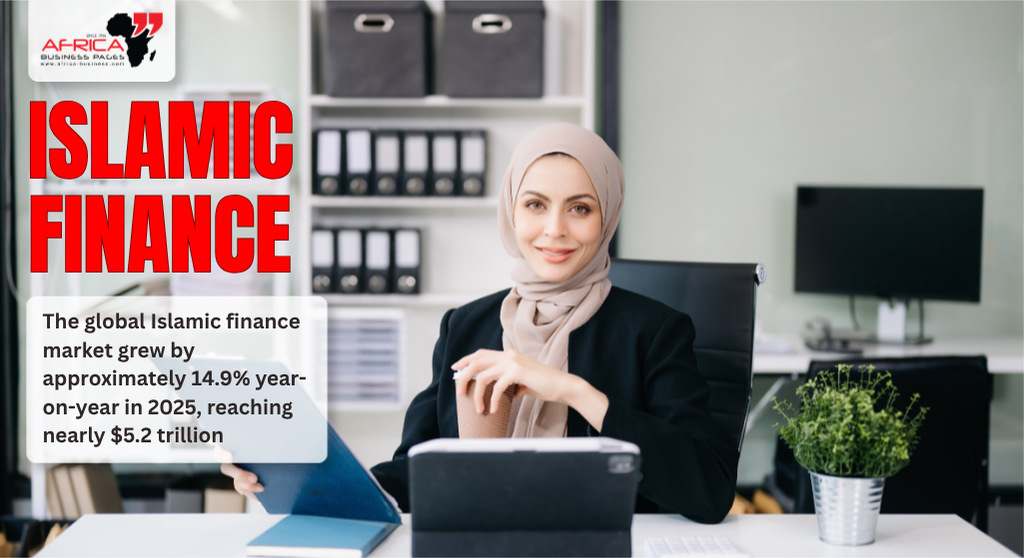
As of 2026, the Islamic finance industry in Africa is experiencing a rapid phase of maturation, transitioning from a niche alternative to a central component of sovereign economic strategies. The global Islamic finance market grew by approximately 14.9% year-on-year in 2025, reaching nearly $5.2 trillion, and is firmly on track to cross the $6 trillion mark by the end of 2026. Africa is actively contributing to this momentum, with several African jurisdictions recording compound annual growth rates of over 20% in Islamic banking, signaling a meaningful geographical rebalancing of global Islamic financial activity.
One of the most dynamic segments driving this growth is the Sukuk market. Global Sukuk issuance exceeded $230 billion recently, and this momentum carried into 2025 and 2026, fueled by sovereign funding and infrastructure investment needs. Importantly, new sovereign and corporate Sukuk markets have successfully emerged in countries like Tanzania, Zambia, and Kenya, marking a historic milestone in sub-Saharan Africa’s integration into global Islamic capital markets. Furthermore, countries like The Gambia are actively issuing short-term Sukuk Salam bills to manage liquidity and fund domestic projects.
The landscape of Shariah-compliant digital banking and Islamic FinTech is also transforming the continent's financial inclusion metrics. Although Islamic FinTech represents a smaller share of total industry assets globally, its strategic significance in Africa far exceeds its size and is increasing materially in 2026. Cross-border Islamic FinTech platforms are opening micro-investment pools and facilitating digital distribution channels that connect underbanked Muslim populations with ethical, asset-backed financing.
Regulatory harmonization and the gradual opening of new jurisdictions remain critical catalysts. Entering 2026, new African market entrants exploring or formalizing Islamic finance frameworks include Ethiopia, Ghana, Uganda, and Somalia, reflecting a surging grassroots demand for Shariah-compliant financial services. The Middle East and Africa region collectively accounted for nearly 70% of the global Islamic finance market share by geography in 2025, underscoring the continent's vital role in the industry's future trajectory.
To sustain this double-digit growth, African nations are deepening their Islamic capital markets by developing liquid secondary markets for Sukuk and standardizing issuance structures to support broader investor participation. With a growing emphasis on ESG (Environmental, Social, and Governance) and green Sukuk issuance, African markets are increasingly aligning Islamic finance with sustainable development goals to attract capital from climate-conscious investors globally.
Did you know?