


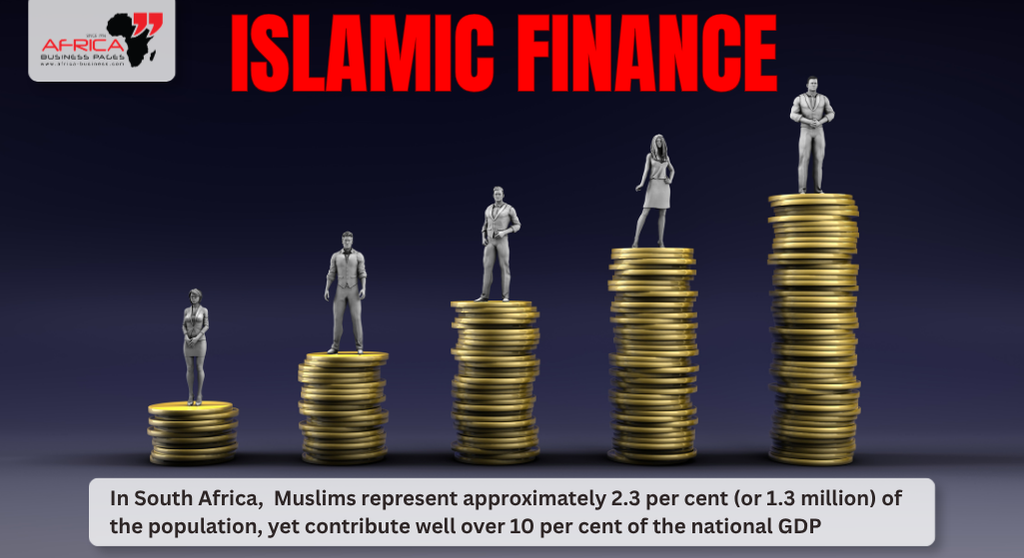
Focusing on South Africa, initial studies state that Muslims represent approximately 2.3 per cent (or 1.3 million) of the population, yet contribute well over 10 per cent of the national GDP. Historically, only a fraction of this population utilized dedicated Islamic banking, but adoption has accelerated significantly.
Islamic finance is rapidly gaining ground in South Africa. As the country boasts the most developed stock exchange and financial infrastructure on the continent, it is perfectly poised as a springboard for Shariah-compliant investment opportunities and penetration into the rest of Africa.
 In September 2014, South Africa made history by becoming the third non-Muslim country—after Hong Kong and the UK—to issue Islamic-compliant debt, setting a massive precedent for the continent. The $500 million sovereign Sukuk, jointly arranged by major global financial institutions, was four times oversubscribed, with investors from the Gulf Cooperation Council (GCC) securing over half of the allocation.
Following the successful maturity of that initial bond in 2020, the National Treasury has actively pursued the diversification of its funding base. Strategic initiatives are currently underway to issue South Africa’s first domestic, rand-denominated Sukuk, aiming to expand Islamic finance beyond traditional banking and into the broader capital markets.
Zambia
Zambia has laid extensive groundwork to accommodate Islamic banking windows alongside its conventional banks. The government successfully launched Islamic finance guidelines to develop a robust regulatory framework, recognizing that Shariah-compliant financing can play a pivotal role in funding critical national infrastructure, agriculture, and manufacturing projects.
Mozambique
As a prominent member of the Islamic Development Bank (IDB) in the Southern African region, Mozambique has been a major beneficiary of targeted development capital. Since joining in 1995, the country has received hundreds of millions in investments, with dozens of active, IDB-funded infrastructure and agricultural projects currently driving domestic growth.
Kenya
Kenya is home to a Muslim population of over 14.5 million, and its Islamic banking sector has grown dynamically under the nation's Capital Master Plan. Kenya has adopted a robust vision for developing Islamic capital markets, leveraging ongoing capacity-building partnerships with GCC nations like Qatar. The regulatory environment has matured rapidly, allowing major international players like Dubai Islamic Bank to establish a strong presence in Nairobi.
Uganda
Uganda boasts a Muslim population of nearly four million. Following the government's approval of the Financial Institutions (Amendment) Bill, the nation successfully paved the way for fully integrated Islamic banking and finance. As a member state of the IDB, Uganda is experiencing surging interest from both foreign and local financial institutions eager to offer Shariah-compliant services to its citizens.
Ethiopia
There is extraordinary growth potential for Islamic microfinance in Ethiopia. With a vast segment of the population historically lacking access to formal credit and saving products, Shariah-compliant alternatives offer a massive inclusion opportunity. The government is actively refining its regulatory framework to build sector confidence, mirroring the success of Takaful (Islamic insurance) markets seen elsewhere in East Africa and Sudan.
Halal Food
The global halal food market achieved a staggering valuation of $2.95 trillion in 2025, with the Middle East and Africa accounting for over 20.6% of global revenue. While the Sub-Saharan African regional spend has historically focused on raw halal meats, the trend has shifted dramatically toward high-value imports and domestic production of halal franchises, prepared meals, and processed frozen foods, driven by a growing, affluent middle class.
Overall Growth of Islamic Finance Assets in Africa (USD Billions)

© Africa Business Pages
Source: Islamic Financial Services Board & Regional Estimates, 2026
Latest Developments in African Islamic Finance
In 2025 and moving into 2026, the African Islamic finance sector transitioned from a niche regional alternative into a systemically important component of sovereign economic strategies. The Middle East and Africa collectively captured roughly 69.8% of the global Islamic finance market in 2025, buoyed by compound annual growth rates that exceeded 20% in several sub-Saharan jurisdictions. With total global assets crossing $5.2 trillion, African nations are increasingly leveraging Shariah-compliant digital banking and mobile FinTech to drastically improve financial inclusion among unbanked populations.
One of the most transformative developments has been the maturation of the African Sukuk market. Beyond early sovereign issuances by South Africa and Nigeria, new corporate and sovereign Sukuk frameworks have successfully launched in countries like Tanzania, Kenya, and Zambia to fund critical infrastructure, healthcare, and energy projects. Looking toward the future, new entrants such as Ethiopia and Ghana are formalizing their regulatory environments to fully integrate Islamic capital markets into their domestic growth agendas.
Did you know?
