

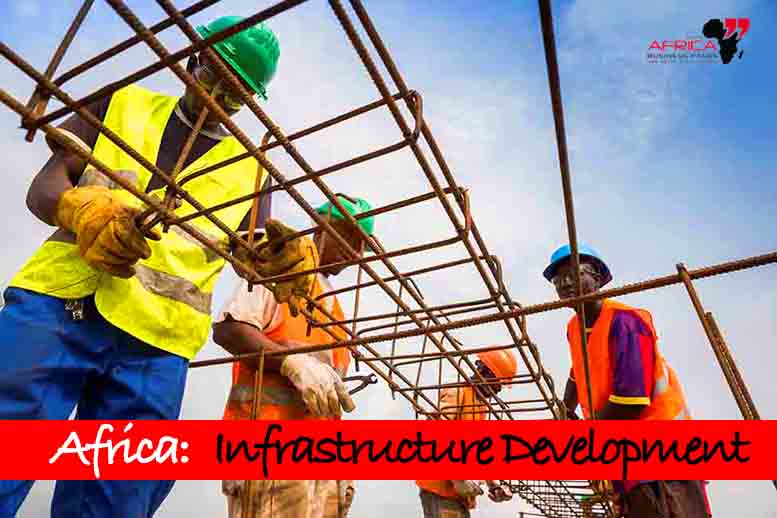
Historically, energy deficits severely hampered continental growth, but massive systemic changes have reshaped the landscape. While estimates once indicated that the African continent lost two percentage points of GDP growth annually as a result of its infrastructure deficit, aggressive national and pan-African electrification and infrastructure mega-projects have radically shifted this trajectory. Today, massive off-grid solar deployments and upgraded power grids are rapidly bridging the gap, bringing electricity to millions of previously unserved households.
 Multiple cross-border initiatives are currently operational or nearing completion, including interconnected highways, standard-gauge railways, deep-water ports, and modernized green-energy power plants. Mega-partnerships, such as the collaborative plans between the African Union and international partners to develop integrated road, rail, and air transport corridors, are unifying the continent's logistical capabilities. While China has long been a champion of infrastructure investment in Africa, a highly diversified array of players—including the United States, the European Union, India, Japan, and Gulf nations—have emerged as major, competitive partners.
Initiatives like the US government’s “Power Africa” project successfully catalyzed the addition of tens of thousands of megawatts of new power capacity across Sub-Saharan Africa. Complementing this, the Infrastructure Consortium for Africa and numerous sovereign wealth funds continue to deploy tens of billions of dollars annually into transport, water, and sanitation infrastructure, with a heavily increasing share sourced directly from private-sector investments and public-private partnerships (PPPs).
Internet and Mobile Connectivity Exploding at a Dizzying Pace Across Africa
African connectivity has fundamentally transformed from a constraint into a massive economic driver over the past decade. International and pan-African telecommunication operators have invested heavily in information and communication technology (ICT) infrastructure, deploying extensive subsea cables and vast terrestrial fiber-optic networks to dramatically improve bandwidth and slash data costs for end users.
As of 2026, the region commands a massive share of the world’s internet users, with broadband access penetrating deeply into rural areas. Along with internet access, Africa remains the global epicenter of mobile technology adoption. Sub-Saharan Africa now boasts well over 600 million unique mobile subscribers. Smartphone connections have surpassed the 1.5 billion mark, driven by the influx of affordable devices and the rapid deployment of 4G and early 5G networks. This ubiquitous high-speed internet infrastructure is actively transforming how people and businesses function, powering a multi-billion-dollar digital economy.
Africa Benefiting from Leapfrogging Technology & Political Maturation
With historically little landline infrastructure to rely on, mobile technology quickly became the absolute standard for communication and, subsequently, digital banking. This technological leapfrogging allowed African nations to bypass legacy systems entirely. At the macroeconomic level, many African governments have successfully implemented stringent monetary policies to manage inflation risks and maintain economic stability, even amidst global volatility.
While political stability was once cited by investors as a primary short-term threat to growth, monumental gains have been made. The vast majority of African nations are now firmly entrenched as democratically stable states, characterized by peaceful transitions of power and institutional resilience.
Previously, African government leaders hesitated to commit to longer-term projects, such as infrastructure and housing construction. Today, administrations operate with multi-decade strategic visions (such as Agenda 2063) because democratic stability allows for long-term capital deployment. There is a documented, undeniable correlation between this political stability and long-term economic progress. Nations like Kenya, Ghana, Botswana, Senegal, and Zambia are reaping the rewards of this stability, positioning themselves for decades of sustained trend growth.
 To further attract global capital, most African countries have instituted robust mechanisms to guarantee the free repatriation of profits and capital gains. Being able to transfer business profits abroad seamlessly is a critical prerequisite for FDI. However, the taxation landscape varies. According to leading accounting firms, capital gains tax rates differ widely—ranging from 5% in Kenya to higher, corporate-aligned rates in countries like Senegal and Uganda. Taxation on dividends generally operates within a highly competitive band of 8 to 15 percent, often mitigated entirely by extensive double-taxation treaties.
While statutory corporate tax rates in Africa may sometimes appear higher than the global average, they are almost universally offset by aggressive, investor-friendly exemptions and incentives. Many nations offer zero-tax holidays for pioneer industries, Special Economic Zone (SEZ) manufacturing, rural investments, or localized job-training programs, dropping the effective tax rate significantly for strategic foreign investors.
The continued, rapid development of the overall financial system provides companies with deep capital pools and lucrative exit opportunities. The continent is anchored by heavyweights like the Johannesburg Stock Exchange (JSE)—ranked among the largest globally with capitalization exceeding $1 trillion—and an increasingly interconnected network of regional exchanges.
In addition to legacy international banks, there are now dozens of highly capitalized domestic pan-African banks. Institutions like Standard Bank and Ecobank operate massive cross-border networks, ensuring seamless corporate banking across dozens of jurisdictions. Initiatives like the African Exchanges Linkage Project (AELP) are successfully connecting the continent’s major stock markets, tackling historical liquidity issues and allowing investors to trade securities across borders with unprecedented ease.
Latest Economic Developments Across Africa
Entering 2026, the African Continental Free Trade Area (AfCFTA) has moved beyond policy into aggressive, practical operationalization. By systematically dismantling cross-border tariffs and harmonizing customs procedures, AfCFTA has birthed the largest unified free trade zone in the world by the number of participating countries. This has triggered a massive realignment in global supply chains; multinational corporations are shifting from importing finished goods into Africa to establishing localized, continental manufacturing hubs in strategic nations like Egypt, Kenya, and South Africa, allowing them to export tariff-free to a unified market of over 1.4 billion consumers.
Simultaneously, the continent has become the epicenter of the global green energy transition. Africa possesses a near-monopoly on the critical minerals required for electric vehicle (EV) batteries and renewable energy grids, including cobalt, lithium, and copper. Rather than merely exporting these raw materials, governments in the DRC, Zambia, and Zimbabwe are strictly enforcing local-beneficiation laws. This policy shift is driving unprecedented foreign direct investment into local mineral processing, battery manufacturing plants, and gigafactories, fundamentally moving Africa up the global industrial value chain and ensuring sustainable wealth retention on the continent.
Did you know?