


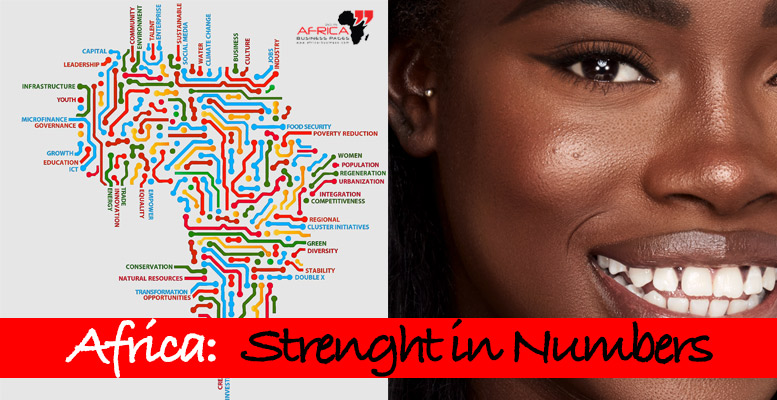
While significant risks remain, we challenge those shying away from investing in Africa to consider the following arguments. First, many of the perceived risks are myths. Second, careful analysis will demonstrate that Africa is not a monolith, and an informed investor can find the right fit. Finally, this is not a journey that a mid-sized company has to take alone. Resources and expertise are increasingly available.
We call it our African formula the 'PAL' Principles—Be Prepared, Be Adaptive, and Be
Local— created from discussions with experts to assist midsized companies in developing
and implementing a winning strategy for expanding to Africa.
Mid-sized companies should not ignore Africa’s transformation into a highly attractive business destination. To capitalize on the burgeoning opportunities, the time to act is now.
 The African continent is an attractive
region for investment. Massive population growth and a rising middle class have created
millions of new consumers hungry for products and services. A variety of economic,
political, and social transformations in Africa are creating investment opportunities
for the next stage of the region’s growth.
The African continent is an attractive
region for investment. Massive population growth and a rising middle class have created
millions of new consumers hungry for products and services. A variety of economic,
political, and social transformations in Africa are creating investment opportunities
for the next stage of the region’s growth.
Many African countries have instituted meaningful reforms in their governance and investment frameworks. New technologies are being developed to solve unique challenges in health care, infrastructure, power, and agriculture. Incentives for investment are emerging every day. And as the gross domestic product of many nations continues to rise, these positive trends are expected to continue.
Many African countries are experiencing high GDP growth. Of the top 10 fastest-growing
economies in the world today, seven are in Africa, with projected growt rates of 7 per
cent or more In the past decade, African economies have outperformed those in Latin
Americ as well as many developed countries in GDP growth.
Such expansion puts these nations on growth trajectories similar to India and China. While today Africa’s collective GDP of $2.5 trillion is quite modest compared with more developed nations, it is the world’s second-fastest growing region, with a projected growth rate of 5 per cent for 2020. Africa’s exports are growing exponentially, with broader industry diversification. Sales of goods and services to foreign buyers quadrupled between 2010 and 2020, from $165 billion toover $700 billion.
Although many African countries continue to benefit from traditional exports of oil, gold, diamonds, rubber, and forest products, national governments are diversifying beyond these industries. For example, Côte d’Ivoire, the world’s largest exporter of cocoa beans, has entered the global confectionery market, now manufacturing chocolate instead of simply exporting cocoa. The move has compelled three multinational companies—Cargill, Archer Daniels Midland, and Olam—to pay more attention to the region.
As African populations continue to grow, goods and services will be needed domestically to keep up with demand. Regional trade has also been growing and crossed $160 billion in 2019, including nearly 15 percent of African exports. An improving investment environment is increasing capital flow to the region.
According to Ernst & Young’s recent survey of business attractiveness, over the last four years Africa has moved from eighth of 10 global regions to the second-most attractive investment destination in the world. Sixty percent of businesses surveyed reported Africa’s improved investment attractiveness over the past year, and nearly three-quarters believe it will improve further in the next three years.
Since the end of the global recession, foreign direct investment (FDI) into Africa has increased every year, with more than $65 billion in inflows in 2019. The United States and theUnited Kingdom remain the top two sources of investment in Africa; however, the number of foreign direct investment projects from China, India, and from new players like Turkey and Brazil are growing at an increasing rate.
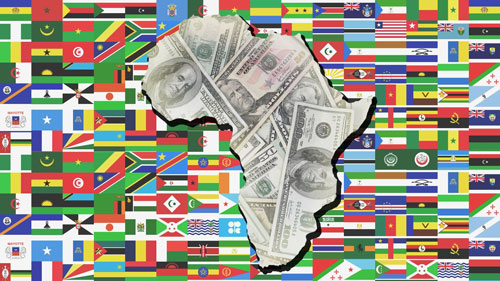
Increased purchasing power is driving changein Africa
In the past 30 years, the African population has grown nearly two-and-a-half times to 1.1 billion people, with 70 percent of the population now under 30 years old. This growth is due to a decline in overall poverty, better disease prevention, and increased life expectancy.
A large portion of the population has also migrated to urban centers, seeking jobs and a better life. These shifts are creating megacities, a pan-African phenomenon, and driving a need for massive advances in technology and innovation. Of the 100 fastest-growing cities in the world, 25 are in Africa, including Lagos, Nigeria, Kinshasa, Democratic Republic of the Congo, and Johannesburg, South Africa.
By 2030 more than half of Africa’s population will live in urban areas. Today, at least 370 million Africans, 34 percent of the total population, are part of the new middle class, strengthening the demand for more and better goods and services. Currently, middle class populations are concentrated in a few of the 54 countries, but continued economic growth and diversification will create wider distribution in the future.
