
Bagader Trading
Tyres, tubes and batteries. Largest stockist of Chinese, Indian and Indonesian Tyres, Korean Tubes and Batteries and a leading exporter of tyres to Africa from Dubai...



When it comes to tyres, the African continent is one of the fastest growing markets for the global tyre industry. The rapid growth of the middle class in many African countries has pushed demand for automobiles to an all-time high – in turn creating a growing market for all kinds of tyres: passenger car tyres, off-the-road tyres, industrial tyres, agricultural tyres, truck, bus and trailer tyres as well as motorcycle and bicycle tyres.
The rising demand for tyres in Africa has led to stiff competition between tyre manufacturers from all across the world seeking to garner a major share of the market for tyres in the new and emerging African markets. Traditionally, European tyre manufactaures had had a monopoly over the African markets and many European brands were top selling tyres in many African countries.
However, in recent times, European tyre firms are 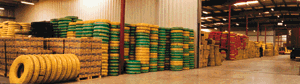 beginning to loose
ground to Chinese and other Asian brands in many emerging markets not only in
Africa, but around the world. Chinese tyres are gaining popularity in several
African markets. Many developing countries, specialy in Africa, are price-sensitive
markets and prefer to import low-priced Chinese tyres rather than the expensive
European and American brands. As a result, China has emerged as a leading exporter
of tyres to many African countries in recent times.
beginning to loose
ground to Chinese and other Asian brands in many emerging markets not only in
Africa, but around the world. Chinese tyres are gaining popularity in several
African markets. Many developing countries, specialy in Africa, are price-sensitive
markets and prefer to import low-priced Chinese tyres rather than the expensive
European and American brands. As a result, China has emerged as a leading exporter
of tyres to many African countries in recent times.
Players in the tyre business worldwide are not renowned for fair trade practices and Kenya is no exception. Some years back, all tyre companies operating in the United States were summoned by the Federal Bureau of Investigation (FBI) after accusations that the multi-million dollar firms were engaged in cartel-like cost-fixing in the country.
In Kenya, a significant bulk of uncustomed products have entered the local market. Firestone, which also imports tyres from the parent company, Bridgestone Corporation of Japan, say they have been in touch with the treasury over the issue, but the practice continues.
Tyres attract a duty of 35 per cent which, according to business analysts, should place the prices of imported and locally manufactured tyres roughly at par, with only marginal price variations on some brands.
But international tyre manufacturers say retail and wholesale prices of some foreign products in the market are well below the expected minimum if costs of production, transport, insurance and duty are considered, an indication that there is illegal dumping.
Apart from lack of infrastructure, most illegally imported tyres, have a quality problem emanating from storage; some are poorly stored in godowns in hot places like Dubai for months, which seriously compromises quality. Before Firestone established its manufacturing plant in Kenya nearly two decades ago, all tyres were imported. The government, eager to promote import-substitution, imposed quotas and tariffs to protect the local industry, which gave the company a virtual monopoly. However, some imports were allowed since there were vehicles in the market which could not use the company's products.
Fifteen percent of Firestone, a member of the Sameer Group of Companies, is controlled by Bridgestone Firestone Inc of the US, which, in turn, is a subsidiary of Japan's Bridgestone Corporation. Japanese company bought Firestone Tyre and Rubber Corporation of the US, which also owns much of war-ravaged Liberia's rubber plantations. Before 2005, buoyed by a weak Japanese yen, Bridgestone was the world's foremost tyre producer . But as the value of the yen against major hard currencies shot up, and dollar-based sales plummeted, it was overtaken by Michellin.
In recent times, the tyre companies in
Kenya have carried their rivalry to the airwaves, each
claiming superior products. While Pirelli and  Michellin
needed introduction since they were new in the market,
a Firestone survey showed that the Michellin campaign
was having a significant impact on sales and Firestone
was forced to embark on their own campaign.
Michellin
needed introduction since they were new in the market,
a Firestone survey showed that the Michellin campaign
was having a significant impact on sales and Firestone
was forced to embark on their own campaign.
Michellin is exclusively marketed by Kingsway Tyres who, however, declined to comment. Pirelli, which is sold locally by Nyanza Petroleum Company, has confined its marketing strategy to advertisements painted on Stage Coach buses, which, ironically, use Michellin tyres! Although the most popular Michellin adverts target matatu and small cars, Firestone claims there has been no major impact by their rivals in this area.
Then there is the issue of warranty. While Firestone products boast that they "come with a written guarantee", Michellin advertisements proclaim "the name is the guarantee". But Firestone is not daunted, offering replacement for any tyre damaged due to errors arising from manufacturing, stressing the fact that its tyres are tailor-made for Kenyan roads.
Besides new tyres, there are also low-quality second-hand ones which soon wear out on the country's rough roads. The managing director of Pirelli (Europe), Valter Donati, says that most used tyres are dumped into the African market after exceeding the legal use limit in European and other developed countries. The thread of the tyres is so shallow that it makes nonsense of the cheap prices, and they also have a poor surface grip.
An increase in tyre import duties has been requested for South Africa, owing to the large quantity of substandard tyres that are being brought into the country from China. The cheaper tyres provide unfair competition for local tyre manufacturers, who are concerned with the risk the thinner tyres pose to the safety of heavy vehicles such as taxis.
The National Union of Metalworkers (Numsa) has asked Government to increase tyre import duties to stop the influx of cheap tyres.
Supporting Numsa's campaign, South Africa's top four tyre manufacturers (Bridgestone, Continental, Dunlop and Goodyear) have brought the Government's attention to their safety concerns for the widespread use of tyres of inferior quality. The new Toyota Quantum taxis, a larger version of the minibus taxi, are most at risk of accidents caused by the cheap tyre imports. To cut costs, taxi drivers replace their 15-inch Quantum tyres with cheap 14-inch tyres, which are thinner and cannot carry the car's weight.
The tyre manufacturers and NUMSA say that there is a marked increase in the dumping of Chinese tyres. "From 2000 to 2010, the imports of passenger vehicle tyres increased by 100 percent from one million to two million per year, while the imports of commercial tyres grew from 200,000 to just less than 840 000," says Etienne Human, the chief executive and president of the SA Tyre Manufacturing Conference (SAMTC).
The effect is being felt by local manufacturers who are experiencing a significant decrease in demand as a result of the effects of the recession in the car industry. Bridgestone, Continental, Dunlop and Goodyear are currently cutting back on up to a quarter of their labour force. China's tyre production far outweighs the country's local demand for tyres, and so tyre dumping on foreign soil has become a necessary evil.
 Etienne
Human said that the South African tyre manufacturing industry is losing more than
Rands 1 billion per year as a result of the dramatic increase in tyre imports. He
attributes this increase to sloppy checking systems by customs officials. As a
result, imported tyres account for almost half of the tyres in the South African
market.
Etienne
Human said that the South African tyre manufacturing industry is losing more than
Rands 1 billion per year as a result of the dramatic increase in tyre imports. He
attributes this increase to sloppy checking systems by customs officials. As a
result, imported tyres account for almost half of the tyres in the South African
market.
He also added that tyre manufacturers applied for anti-dumping import duties against Chinese companies but their application was unsuccessful. Despite the manufacturers assessment that the tyres are of inferior quality, Sharma Iqbal, a deputy director-general at the Department of Trade and Industry said that all tyre imports were standardised and approved by the SA Bureau of Standards.
So despite the best efforts of the most developed country in the African continent, the onslaught of the Chinese manufacturers continues. Chinese tyre manufacturers have, in a way, broken the myth about European technological superiority by producing high quality tyres at fraction of the cost. The European brands, used to charging high prices for their products, have finally been challenged and are now being forced to roll back their profit margins and compete with Chinese manufacturers.
In a significant all-cash overseas deal worth about US$80
million, the board of directors of Apollo Tyres Ltd (ATL) approved the acquisition
of the Durban-headquartered Dunlop Tyres International (Pty) Ltd (Dunlop South
Africa).
The 100 per cent equity buyout transaction, subject to regulatory approvals in both
countries, would enable the US$ 726 million ATL to secure a toehold in the fast
growing Africa region and also a strong presence in the South African tyre
market.
Besides the benefit of superior radial tyre technology, the acquisition would also
enable the domestic tyre major to access the European market through the
distribution network owned by the $200-million Dunlop South Africa.
 By virtue of the equity buyout of Dunlop South Africa,
ATL would get to control Dunlop Africa Marketing UK (registered in the UK),
which is a 100 per cent subsidiary of Dunlop South Africa and also the holding
company of Dunlop Zimbabwe (which owns the Zimbabwe facility).
By virtue of the equity buyout of Dunlop South Africa,
ATL would get to control Dunlop Africa Marketing UK (registered in the UK),
which is a 100 per cent subsidiary of Dunlop South Africa and also the holding
company of Dunlop Zimbabwe (which owns the Zimbabwe facility).
Dunlop South Africa had 3,000 employees, two
plants in South Africa (each 75 tonnes per day) and one plant in Zimbabwe (35
tonnes per day bias tyre facility of Dunlop Zimbabwe). At present, ATL's
capacity in India is about 750 tonnes per day!
Sarkar said that ATL has no plans of making any
changes to the management of Dunlop South Africa. Moreover, the existing brands
of the acquired company would be continued. Prior to this transaction, financial
investors (comprising mainly private equity, individual investors and some
holding by members of senior management) owned Dunlop South Africa.
Sarkar expressed confidence that all regulatory
approvals would be received easily. "As far as India is concerned, we have
to only get a post-facto approval from the Reserve Bank of India as the
transaction is lower than $500 million. As regards the South African Competition
Commission, we don't foresee any problem," he said.
Apart from Dunlop South Africa, the other three
significant players in the South African market are Continental, Bridgestone and
Goodyear. All the four players enjoyed nearly equal market share.
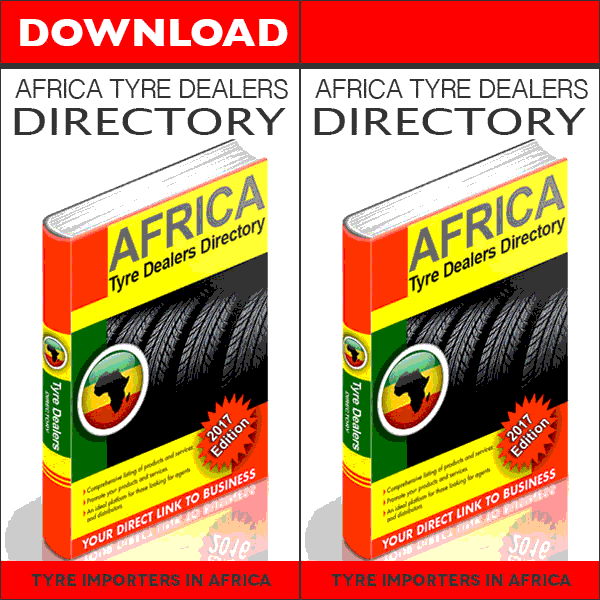
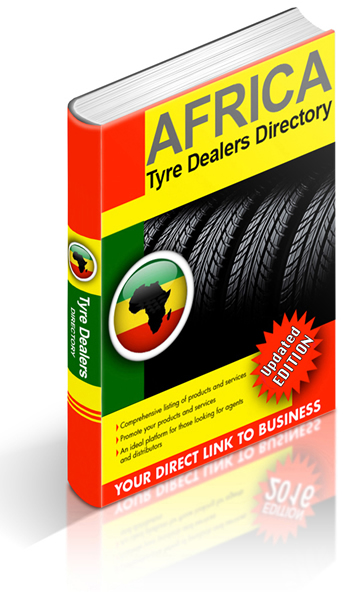 In an effort to connect African tyre dealers with
international suppliers and tyre manufacturers, the Africa Business Pages has
compiled a special Africa Tyre Dealers Directory which lists all
major importers of tyres in Africa, wholesalers of tyres in Africa as well as major
distributors of tyres in Africa. This unique database of tyre dealers in Africa
lists importers of tyres in as many as 22 African countries and has served as a
ready-reference guide for those looking to export tyres to Africa. The
Africa Tyre Dealers Directory is now available as an instant
download in Excel format. (Download link available HERE). The directory provides a comprehensive list of tyre
dealers in African countries like Kenya, Uganda, Tanzania, Mozambique, Sudan,
Ethiopia, Ghana, Nigeria, Cote d'Iviore, Cameroon, Angola, Namibia, South Africa,
Zambia, Zimbabwe – to name a few.
In an effort to connect African tyre dealers with
international suppliers and tyre manufacturers, the Africa Business Pages has
compiled a special Africa Tyre Dealers Directory which lists all
major importers of tyres in Africa, wholesalers of tyres in Africa as well as major
distributors of tyres in Africa. This unique database of tyre dealers in Africa
lists importers of tyres in as many as 22 African countries and has served as a
ready-reference guide for those looking to export tyres to Africa. The
Africa Tyre Dealers Directory is now available as an instant
download in Excel format. (Download link available HERE). The directory provides a comprehensive list of tyre
dealers in African countries like Kenya, Uganda, Tanzania, Mozambique, Sudan,
Ethiopia, Ghana, Nigeria, Cote d'Iviore, Cameroon, Angola, Namibia, South Africa,
Zambia, Zimbabwe – to name a few.
Tyres, tubes and batteries. Largest stockist of Chinese, Indian and Indonesian Tyres, Korean Tubes and Batteries and a leading exporter of tyres to Africa from Dubai...

Complete range of automobile spare parts, tyres, batteries and lubricants available for the tough, demanding driving conditions of Africa. A-MAP is one of the leading exporters of automobile spare...
Made in Korea under strict quality control, Sebang Batteries are gaining popularity in the African markets as they are durable, rugged and competitively priced. Available in various sizes...

Exedy Middle East FZCO manufactures a complete range of clutch and transmission solutions for a wide range of automobiles and machinery. Exedy clutches are in high demand in Africa...

Gifts, Novelties and Promotional Material supplier. Watches, Bags, Key Chains, Desktop accessories, Pen Sets, Gift Items... Wanted business partners in Africa...

Competitively priced tyres of almost all well known brands like Advance, Double Happiness, GT, Double Ox, Hankook etc. BBG Trading is a major exporter to African markets...

Manufacturer of high quality range of cosmetics – including haircare, skincare, nail care products. The company seeks buyers of cosmetics in Africa. Agents and distributors wanted in African...
An established export and distribution company based out of Hong Kong and China since 1990. The company specializes in the trade of dry-break bulk agro-commodities...

An established export and distribution company based out of Hong Kong and China since 1990. The company specializes in the trade of dry-break bulk agro-commodities...
