

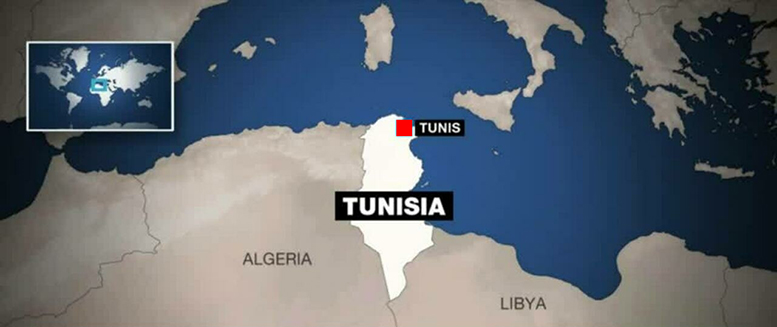
Tunisia features a predominantly Muslim population and lists Arabic as its official national language. In recent years, the country has navigated complex macroeconomic transitions to solidify its standing as a critical manufacturing and trade bridge between Africa and Europe. While traditional economic metrics have fluctuated during periods of global volatility, Tunisia's relentless drive to position itself as a first-world technology and logistics hub continues to gain impressive momentum.
Like other stars in Africa's economic firmament, Tunisia is reaping the long-term rewards of its heavy historical investment in human capital. The nation leverages the advanced skills of its people to manufacture and engineer products for which there is high international demand. Unlike distant offshore markets, Tunisia is situated right on the doorstep of its principal market—the European Union—to which it sends roughly 70 to 80 per cent of its exports. It is this immediate geographical proximity, combined with a highly educated workforce, that forms the foundational key to Tunisia's economic resilience.
Latest Economic Developments
As of 2026, Tunisia is rapidly emerging as a central pillar in Europe's green energy transition. One of the most monumental infrastructure developments in the nation's history is the "Elmed" interconnector project—a 200-kilometer undersea high-voltage electricity cable directly linking Tunisia to Italy. This multi-million-euro mega-project allows Tunisia to harness its massive, untapped solar and wind potential in the Sahara and export clean, renewable electricity directly into the European grid. This initiative not only secures foreign exchange revenues but firmly establishes Tunisia as a strategic green energy corridor for the Mediterranean.
Simultaneously, Tunisia is experiencing a profound technological renaissance. The government's progressive "Startup Act" has transformed Tunis into one of the most vibrant tech ecosystems on the African continent. Favorable regulatory frameworks, tax exemptions, and state-backed venture capital initiatives have attracted a surge of international tech firms looking for nearshoring opportunities. With European companies eager to shorten their supply chains post-pandemic, Tunisia’s abundance of multilingual engineers and software developers has made it the premier destination for IT outsourcing, aerospace component manufacturing, and automotive electronics assembly.
Tunisia's Top 7 Commodity Imports
Connecting Africa to Global Supply Chains
The roots of Tunisia's modern industrial achievements lie in accurately forecasting international trends. Decades ago, the country realized the implications of globalization, understanding that the entire production process would eventually be internationalized. By integrating into the European Free Trade Area frameworks, Tunisia ensured its manufactured goods could compete globally purely on quality and price.
If they could position themselves as low-cost, high-quality producers, they had the chance to rub shoulders with the big boys in the industrial world. Their geographic position, at the hub of the European, Arab, and African worlds, remains their greatest logistical advantage. To gear up the country, Tunisia initiated a quiet but meticulous revolution: the empowerment of women in the workforce, the creation of modern infrastructure, and the continuous retraining of its labor pool.
Today, Tunisia's investment in education remains one of the highest in the developing world. The universities produce thousands of engineers and IT specialists every single year. The combination of these factors has produced one of the most skilled and best-qualified workforces in Africa—and the southern Mediterranean.
More significantly in terms of international competitiveness, the cost of skilled labor remains lower than in countries which are Tunisia's main nearshoring rivals in Eastern Europe. This exceptional value proposition explains why virtually every household brand name, from Airbus to major European automotive manufacturers, maintains a critical production or assembly presence in Tunisia today.
Did You Know?
