

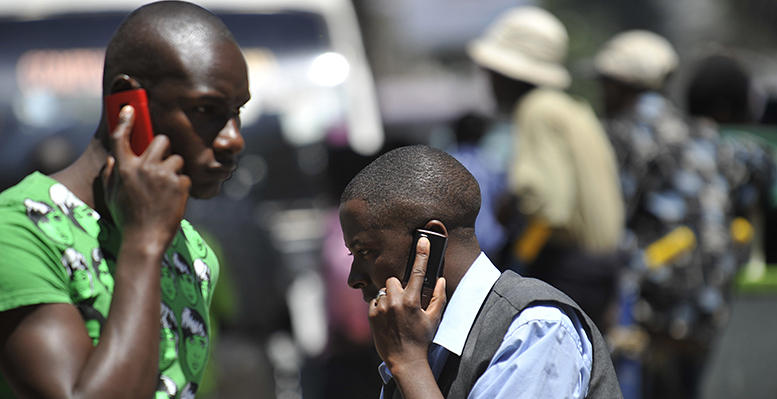
A recent comprehensive economic report indicates that the mobile industry now contributes over $170 billion to Africa’s economy, representing approximately 8.5 per cent of the continent's Gross Domestic Product (GDP). Mobile connections across the African continent have skyrocketed past the 1.2 billion mark, pushing mobile penetration well beyond 80 per cent in several key regions.
Over the past decade, Africa has experienced the fastest mobile growth rate globally, consistently expanding and cementing its position as the second-largest mobile market in the world, trailing only Asia. This explosive growth has transformed the telecommunications sector into a major economic engine, employing over 6 million people directly and indirectly across the continent.
In Ghana, for example, there are now more than 40 million active mobile connections, representing a penetration rate of over 120 per cent (due to multi-SIM ownership). The sector constitutes a massive pillar of the national economy, driving significant foreign direct investment and contributing heavily to government revenue.
Projections indicate that bridging the remaining digital divide and bringing the whole region to full broadband penetration could add an additional $50 billion in aggregate GDP to the region. The mobile industry remains the ultimate enabler and catalyst for development, with fierce competition continuously driving down data prices and increasing smartphone adoption.
Price wars have historically been common across the continent, making communication highly affordable. Today, while prepaid voice services remain vital, the uptake of mobile broadband and data services is the primary growth driver. In markets like Kenya, data revenues—fueled by a young, digital-first population—now represent the majority of operator income. Despite downward pressure on pricing, the mobile industry continues to revolutionize agriculture, banking, education, and healthcare through specialized Mobile Value-Added Services (VAS).
5G and the Mobile Money Revolution
The Dawn of 5G and Digital Infrastructure: Africa is currently undergoing a massive digital infrastructure upgrade. Major telecom operators have successfully launched commercial 5G networks in key markets including South Africa, Nigeria, Kenya, and Egypt. This rollout is heavily supported by multi-billion-dollar investments in subsea cables (such as the 2Africa and Equiano cables) and inland fiber-optic networks. This leap in connectivity speed and bandwidth is accelerating the growth of the continent's tech ecosystem, enabling advanced enterprise solutions, cloud computing, and a booming gig economy that relies on high-speed internet access.
The Undisputed King of Mobile Money: The emergence of mobile financial services has put Africa firmly at the forefront of the global Mobile Money industry. Platforms like M-Pesa in East Africa and MTN Mobile Money (MoMo) in West Africa process hundreds of billions of dollars in transactions annually. This ecosystem has evolved far beyond peer-to-peer transfers; it now encompasses micro-lending, insurance, merchant payments, and cross-border remittances. By leapfrogging traditional banking infrastructure, mobile money has driven unprecedented financial inclusion, bringing millions of unbanked Africans into the formal digital economy.
From Counterfeits to Affordable Tech
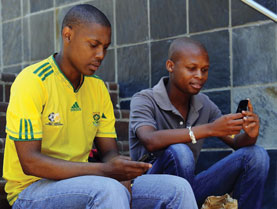 A decade ago, the African market was flooded with cheap, smuggled counterfeit cellphones—often low-quality knock-offs of major global brands. Cash-strapped governments and telecommunication regulators, such as the Communications Authority of Kenya, initiated aggressive crackdowns, successfully phasing out millions of counterfeit devices by blocking unrecognized IMEI numbers from mobile networks.
Today, the landscape has completely transformed. The demand for sub-standard knock-offs has plummeted as legitimate, highly affordable smartphone brands have entered the market. Asian tech giants like Transsion (parent company of Tecno, Infinix, and Itel), Xiaomi, and Samsung now dominate the African handset market by offering high-quality, durable smartphones tailored specifically for African consumers—featuring extended battery life, dual-SIM capabilities, and localized camera technologies. Furthermore, a growing push for local manufacturing has seen smartphone assembly plants open in countries like Egypt, South Africa, and Rwanda, signaling a mature, quality-driven mobile ecosystem.
Did You Know?

