


Centuries of slavery and colonialism deprived the African continent of her able human and economic resources. The able men and women were carried away to work in the plantations of the Americas (in all about 30 to 40 million people) and they helped to make America and Europe what they are today. Obviously, the slave trade deprived the continent of her energetic men and women—a vital resource in any development process—and sunk the continent into an intellectual wilderness.
About the same time that slavery was being vigorously pursued, natural resources including timber, gold, diamonds, tin ore, and ivory were looted in large quantities by European nations, namely Belgium, Britain, France, Germany, Portugal, Spain, and Italy. After slavery was abolished, the aggressive extraction of these natural resources continued seamlessly.
The irony is that virtually all the income from these resources was used to finance the economic and infrastructural development of European countries, with little to nothing being used to develop the African nations from which they were extracted. A clear historical example is the Democratic Republic of Congo, where King Leopold II of Belgium enslaved the population, forced them to work without pay, caused the deaths of up to 10 million people, and looted the country's resources.
When the DRC was transferred from Leopold II to the Belgian state, the exploitation continued until the DRC gained her independence in 1960. The Congo Free State was a main supplier of rubber—a vital raw material for the booming global tyre industry—and the wealth generated transformed Belgium into one of the wealthiest nations in Europe, courtesy of the enslavement of Africans and the theft of their resources.
Africa's Top Fastest Growing Economies
(Est. 2026 GDP Growth %)

© Africa Business Pages
Source: IMF & Regional Economic Outlook Projections, 2026
Belgium was not alone in its actions. Britain, France, Spain, Portugal, Germany, and Italy all looted Africa of her gold, diamonds, ivory, timber, cobalt, coltan, tin ore, bauxite, and manganese. Africans who resisted were killed in their millions, as seen in South West Africa (now Namibia) where the Germans, between 1904 and 1907, committed the first genocide of the 20th century by systematically targeting the Herero and Namaqua people. While Europe grew richer, Africa was left impoverished—a trend that persisted until the 1950s when African nations finally began to gain their independence, beginning with Libya in 1951, followed by Sudan, Morocco, and Tunisia in 1956, and Ghana in 1957.
With little or no investment during colonial rule, post-colonial governments inherited countries with practically no modern infrastructure—lacking roads, railways, harbours, telecommunications, or adequate education and healthcare systems. The only areas that saw infrastructural investment were those where raw materials were heavily extracted. Furthermore, independence rarely came easily.
Algeria, Zimbabwe, Angola, Kenya, Namibia, and South Africa all attained their independence or majority rule through protracted armed struggles. In most cases, the few infrastructures that did exist were destroyed during these conflicts.
As if slavery, colonialism, and resource looting were not enough, the continent became a proxy battleground during the Cold War. Superpowers and their allies battled for influence and control over Africa's strategic resources. The consequence was political instability and the wanton destruction of lives and property that continues to affect parts of the continent today. Elected leaders were overthrown, assassinated, or subjected to Cold War tactics including bribery and blackmail, stunting the continent's development.
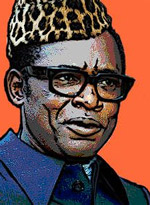 The new crop of leaders who replaced independence pioneers often became increasingly authoritarian and corrupt. Joseph Mobutu Sese Seko, who took power following the assassination of Patrice Lumumba, ruled Congo for 32 years. Under his regime, the country impoverished while he and his cronies grew exceptionally wealthy, allowing foreign interests free rein to extract critical minerals like cobalt.
As dictators gained the backing of global powers, their citizens faced deepening poverty and hopelessness. State funds were siphoned off by corrupt officials, leaving virtually no capital for infrastructural development. Moreover, the operations of massive multinational corporations—particularly in the oil and mining sectors—often exacerbated this poverty through severe environmental degradation. Rivers, wells, and streams were polluted, rendering fishing communities unemployed and destroying agricultural lands.
Brain Drain & Systemic Mismanagement
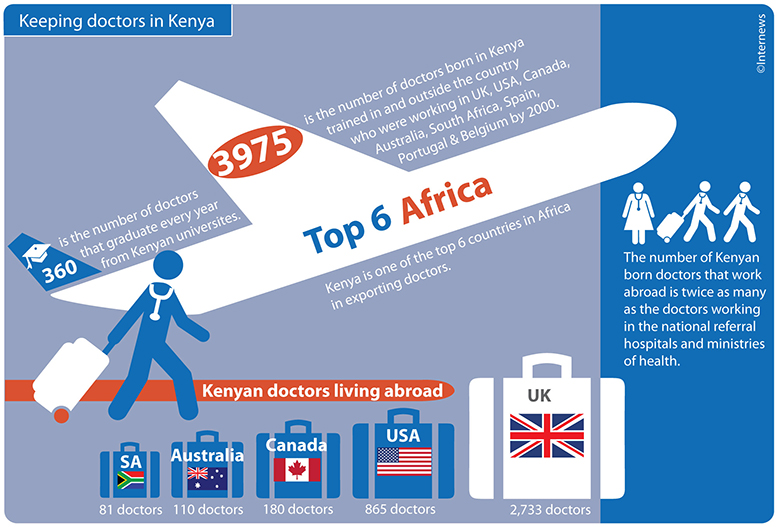
Poverty on the continent has also been fueled by a severe brain drain. The flight of doctors, engineers, architects, lawyers, teachers, and agricultural experts has severely limited the ability of many nations to implement development projects. This intellectual exodus has rendered government agencies weak; some communities lack doctors entirely, while universities struggle to retain faculty. Historically, countries like Malawi, Zimbabwe, Nigeria, and Ghana lost heavily to Europe and North America.
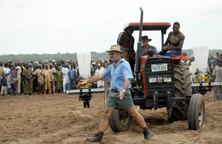 Corruption remains another tragic cancer. According to past African Union (AU) estimates, billions of dollars are lost annually to corruption and illicit financial flows. In Nigeria, despite generating hundreds of billions from oil exports over the decades, a significant portion of the population continues to live in poverty. Historically, prominent politicians and state governors were prosecuted globally for laundering millions of dollars in stolen state funds.
Historically, across several nations, kleptocracies replaced democratic principles. For decades, a select few clung to power without accountability. Leaders like Muammar Gaddafi of Libya (42 years), Omar Bongo of Gabon (41 years), Robert Mugabe of Zimbabwe (37 years), and Hosni Mubarak of Egypt (30 years) ruled for generations before eventually being ousted or passing away. This concentration of power often resulted in profound economic mismanagement.
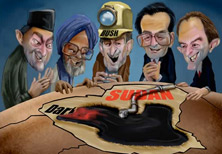 In the Democratic Republic of Congo, vast deposits of gold, diamonds, timber, coltan, and cassiterite (tin ore) represent unimaginable wealth. Coltan is essential for mobile phones, and cassiterite is heavily traded globally. Yet, historical mismanagement, systemic corruption, and foreign-backed rebel conflicts have kept the general population trapped in poverty, while external markets profit immensely from the extraction.
Latest Economic Developments (2025/2026)
Despite historical challenges, the economic narrative of Africa in 2026 is undergoing a profound structural transformation. The continent is no longer just a passive exporter of raw materials. Driven by the global transition to green energy, African nations—particularly the DRC, Zambia, and Zimbabwe—are leveraging their monopolies on critical minerals (like lithium, cobalt, and copper) to force multinational companies to build local processing and battery manufacturing plants. This policy shift is finally retaining value-added wealth within African borders, creating high-tech jobs, and breaking the centuries-old cycle of raw resource extraction.

The Way Out for Africa
It is clear that severe forces within and outside the continent historically contributed to its impoverishment. But the focus must remain forward-looking. The progress made by nations like China, India, Singapore, and the UAE over the last half-century proves that poverty is not permanent. Nations rise when leaders formulate visionary policies that address systemic problems.
To reverse the legacy of exploitation and mismanagement, governments must focus on strengthening democratic institutions, ensuring electoral integrity, and enforcing strict anti-corruption frameworks. The judiciary must be empowered, and the influence of the military in civilian governance must be permanently curtailed. Above all, heavy, sustained investment must be directed into human capital and critical infrastructure—schools, hospitals, modern transport networks, and research institutions—laying the foundation for self-sustaining economic development.
Did you know?