

In recent years, Ghana has emerged as a major importer of goods from Dubai. Having established itself as one of the prime business centres in the West African region, Ghana has earned the reputation of being the leading distribution hub of the region. Sustained economic reforms and a rapidly developing infrastructure have helped Ghana cement its status as a premier commercial gateway in West Africa.
Automobile spare parts, tyres, batteries, ball bearings, computer hardware, paper products, plastic goods, perfumes, cosmetics, toiletries, stationery items, lubricants, secondhand cars, machinery, and raw materials are some of the goods exported in massive quantities to Ghana from Dubai. Crucially, these goods are also actively re-exported to the nearby landlocked markets of Burkina Faso, Mali, and Niger.
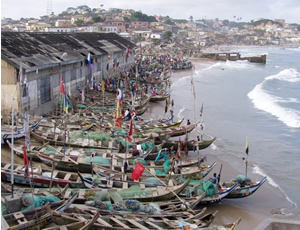 Until its independence from British colonial rule on 6 March 1957, Ghana was called the "Gold Coast", a name given by early Portuguese explorers who first set foot on its shores in the 15th century. The name aptly described the country's immense wealth in gold and natural resources. From the time the Portuguese discovered gold in 1471 to independence in 1957, the monarchs of several European kingdoms—notably Denmark, England, Holland, Prussia, and Sweden—sent explorers and merchants to the country for its abundant natural and human wealth. They battled for supremacy, building forts and castles that served as trading posts. Vestiges of this European colonial presence are evidenced by the fact that 29 of the 32 colonial forts and castles dotted along the coast of West Africa are located in Ghana.
Ghana's Top Import Commodities

© Africa Business Pages
Source: OEC Trade Statistics & Regional Customs Data, 2026
Regional Integration & Investment
Ghana is a foundational pillar of the Economic Community of West African States (ECOWAS), a regional economic organization comprising a thriving market of hundreds of millions of people. Formed in 1975, ECOWAS allows for the free movement of goods and people across its 15 member nations. Furthermore, Ghana's status as an economic force was permanently elevated when the capital, Accra, was selected to host the permanent Secretariat of the African Continental Free Trade Area (AfCFTA). This historic agreement has transformed Ghana into the commercial capital of a unified African market projected to encompass 1.4 billion people.
Continuous amendments to Ghana's Investment Promotion Centre (GIPC) Act have opened up a wide range of new business opportunities. The legislative framework guarantees the freedom for non-Ghanaians to establish and run enterprises in potentially lucrative areas such as natural gas, hydropower and solar projects, large-scale commercial farming, agro-processing, pharmaceuticals, and information technology.
Tourism remains a phenomenally strong area for new business projects. Propelled by the historic "Year of Return" and the ongoing "Beyond the Return" initiative, Ghana has become a premier global heritage destination. The sector, which includes eco-tourism, beach resorts, and cultural heritage tours, is a massive economic driver, currently generating billions of dollars annually in tourism receipts.
Divestments and private-sector incentives have heavily encouraged multinationals, medium-sized foreign companies, and the affluent Ghanaian diaspora to expand their business interests locally. Legacy investments by giants like Coca-Cola, Heinz, Caterpillar, and IBM paved the way. Today, this has evolved into massive automotive assembly plants established by Volkswagen, Toyota, and Nissan, alongside tech expansion from global giants opening artificial intelligence labs and engineering centers in Accra. The time has never been better for doing business in Ghana, Africa's beacon of economic stability.
Recent Economic Developments in Ghana
Entering 2026, Ghana has successfully navigated a challenging macroeconomic period, emerging highly resilient following a comprehensive $3 billion IMF-supported Post-COVID-19 Program for Economic Growth (PC-PEG). The government's aggressive debt restructuring program and stringent fiscal consolidation have successfully stabilized the local currency (the Cedi) and brought inflation down to manageable, single-digit targets. This restored macroeconomic stability has triggered a massive return of foreign direct investment, particularly in the manufacturing, fintech, and renewable energy sectors, as global investors leverage Accra's position as the headquarters of the AfCFTA.
Did you know?
