


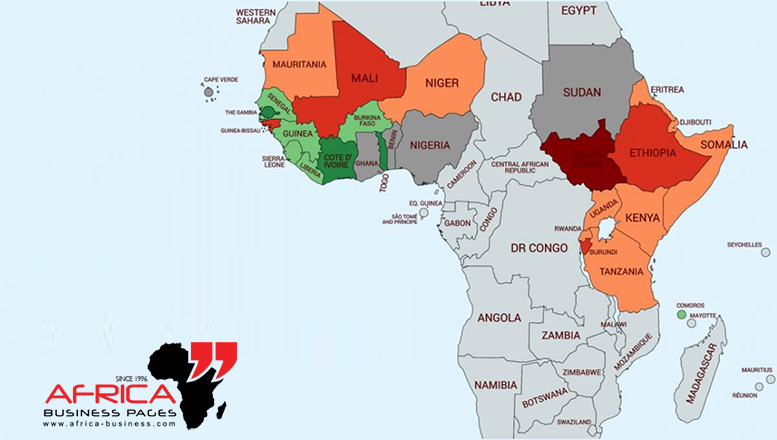
East and West Africa may be on the same continent, just a few hours' flight from each other, and with complementary economies that make them natural trading partners. Yet, historically, they have remained economically disconnected.
 With a combined regional population of over 1.2 billion and well-matched resources, East and West Africa have long recorded some of the lowest bilateral trade levels of any regions globally. Transport logistics remain a primary bottleneck. It can still cost twice or thrice as much to fly from East Africa to West Africa as it does to fly from Africa to Europe. While a flight to London boasts multiple daily departures at highly competitive rates, routes connecting East African hubs to West African cities like Dakar or Lagos are often characterized by limited carrier options and higher ticket prices.
Communication infrastructure also historically posed a significant hurdle. Although cross-border telephony costs have dropped, physical infrastructure like direct road, rail, or sea links between the two regions remains severely underdeveloped. A logistics analysis highlighted that transporting a container by road across the continent's interior can be exponentially more expensive than shipping the same container from the United Kingdom to West Africa. Dr. Joshua Kivuva, a lecturer at the University of Nairobi, notes that relations between East and West Africa have been historically limited. “Different languages and historical trading routes could also be attributed to the minimum contact between the two regions,” he adds.
 A UN Economic Commission report previously highlighted that trade among African countries accounted for just a fraction of their total external trade, often losing out to European markets. Because of these systemic hindrances, exports from North and Central Africa would notoriously find their way to European warehouses before being redirected back to other African markets. However, regional economic communities like COMESA (Common Market for Eastern and Southern Africa) and ECOWAS (Economic Community of West African States) have actively worked to reduce trade barriers, bringing tangible benefits in employment and regional incomes.
The Dawn of the AfCFTA and Digital Integration
The implementation of the African Continental Free Trade Area (AfCFTA) has marked a historic turning point for cross-regional commerce. With 50 nations now having ratified the baseline agreement, the framework is actively dismantling the historical barriers that isolated East and West Africa. By aiming to eliminate tariffs on 90% of goods and establishing the Pan-African Payment and Settlement System (PAPSS), the AfCFTA is laying the groundwork for a unified $3.4 trillion market. Crucially, major economic anchors like Kenya and Nigeria are among the 25 nations that have finalized their Schedules of Tariff Concessions, securing the necessary domestic legal frameworks to allow duty-free trade to flow across the East-West corridor.
 Simultaneously, the digital landscape is undergoing a critical evolution, transitioning from an infrastructure deficit to a usage challenge. As of 2026, mobile broadband networks cover an impressive 87% of Sub-Saharan Africa’s population, yet only 27% actually use mobile internet. Closing this 60% "usage gap"—which leaves over 710 million people offline despite being within network reach—is the next frontier for the region's economic developers. Addressing device affordability, digital literacy, and data costs will be paramount to unlocking the full potential of digital trade, helping cross-border B2B networks thrive.
Did You Know?
