
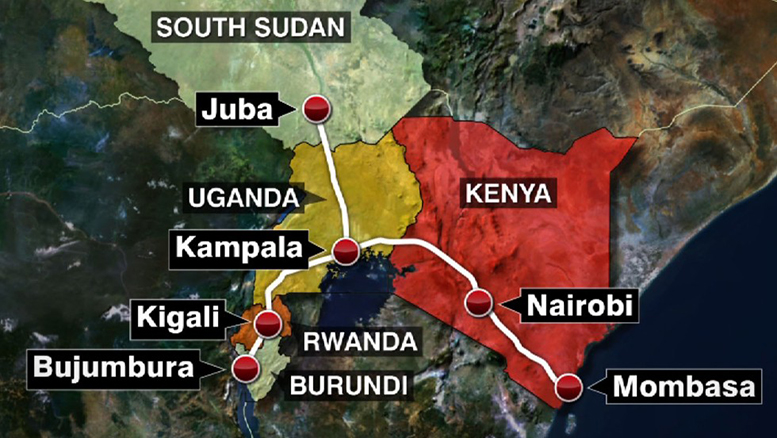
A new modern Standard Gauge Railway (SGR) network linking Uganda, Kenya, and South Sudan is set to radically transform trade and logistics amongst East African nations. The proposed mega-infrastructure rail link, forming part of the broader Northern Corridor Integration Projects, is aimed at drastically boosting trade ties in the Eastern African region. This railway link will be the first-ever stable, high-capacity link between landlocked South Sudan and its coastal neighbors, easing the delivery of essential services and heavy cargo across the vast region.
The expanding rail network is designed to establish a seamless transit corridor from the Indian Ocean to the African hinterland. Strategically, it enables South Sudan to export its oil and agricultural products more efficiently through interconnected pipelines and railways leading to the Port of Mombasa and the new Lamu Port (LAPSSET corridor). From these maritime hubs, goods can be rapidly distributed to Rwanda, the Democratic Republic of the Congo (DRC), Uganda, and Tanzania.
Uganda is positioned to be one of the primary beneficiaries of the new railway network. Historically, Uganda’s biggest economic handicap has been the exorbitantly high cost of freight between Kampala and the nearest ocean port of Mombasa in Kenya.
Most Ugandan manufacturing companies previously relied on slow, expensive overland trucking because the century-old meter-gauge railway links were inefficient. The new high-speed rail links will slash transit times from days to mere hours, driving down production costs and offering a massive competitive boost to businesses in Uganda.
To maximize regional integration, the governments of Kenya and Uganda are simultaneously rehabilitating existing meter-gauge lines while pushing forward with the modern SGR extensions. The Ugandan government has already expedited the revamping of the Tororo-Kampala railway line. Master plans are fully in motion to extend the existing railway network deep into the mineral-rich eastern Democratic Republic of the Congo and northwards into South Sudan.

East Africa Real GDP Growth Projections
"If these railway arteries are extended into these resource-rich zones, our business community will be able to tap into entirely new frontier markets. This will, in turn, aggressively promote regional trade and secure East Africa's economic integration," noted regional transport authorities.
South Sudan, on the other hand, plans to leverage the new transport corridors to bypass historical logistical bottlenecks and export its oil to global markets more securely. South Sudanese energy officials anticipate using the upgraded infrastructure to move a significant portion of their daily crude output, alongside importing vital consumer goods, construction materials, and machinery. South Sudan currently produces roughly 150,000 barrels of oil a day, and boasts proven oil reserves of over 3.5 billion barrels—making it a highly lucrative market for regional suppliers. Since its independence in 2011, South Sudan has remained a prime focal point for East African investors and B2B traders leading the region's reconstruction boom.
Latest Economic Developments & Regional Integration (2026)
Entering 2026, the economic landscape of East Africa is undergoing a profound transformation driven by aggressive infrastructure investments and the operationalization of the African Continental Free Trade Area (AfCFTA). The region is consistently outperforming continental growth averages, fueled by a pivot from purely exporting raw materials to establishing regional manufacturing hubs. Special Economic Zones (SEZs) strategically located along the new railway corridors in Kenya and Uganda are attracting billions in Foreign Direct Investment (FDI), particularly in agro-processing, textile manufacturing, and automotive assembly. This coordinated industrialization allows East African nations to trade finished goods tariff-free across borders, vastly increasing intra-African trade volumes.
Furthermore, the region's logistics sector is being rapidly digitized. Trade barriers that previously caused days of delays at border crossings like Malaba and Busia have been dismantled through the implementation of One-Stop Border Posts (OSBPs) and blockchain-secured electronic cargo tracking systems. This digital integration, combined with the physical connectivity of the SGR, has reduced the cost of moving a standard freight container from Mombasa to Kampala by nearly 40% compared to a decade ago. Consequently, East Africa has firmly cemented itself as the most integrated, dynamic, and investor-friendly economic bloc on the African continent.
Did You Know?