

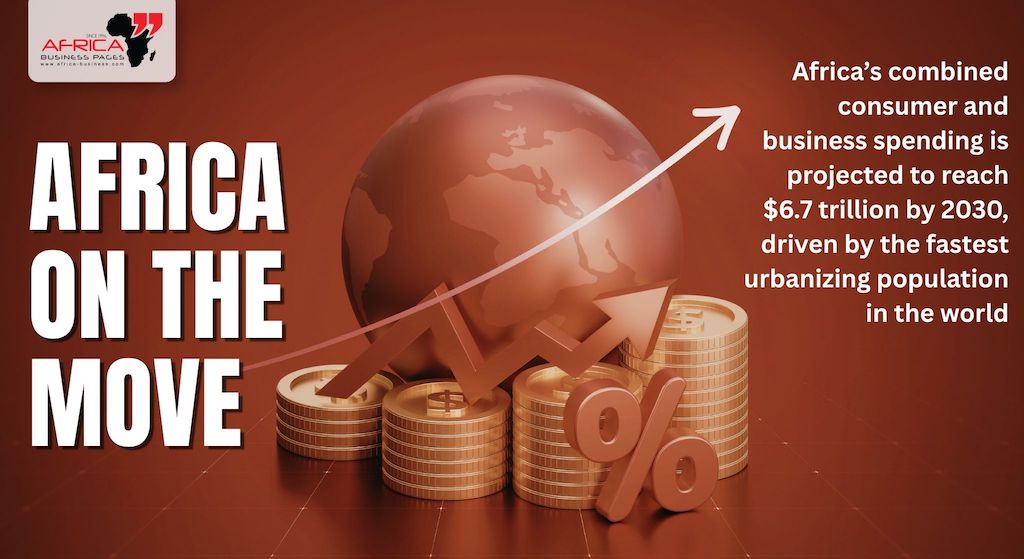
While many historically wrote off Africa as the continent of despair, enterprising individuals, multinational corporations, and forward-thinking organizations have long recognized the huge, untapped potential of the region. Today, they are actively pursuing and scaling highly lucrative business ventures across the continent.
The biggest challenge to doing business in Africa is finding accurate, up-to-date information and understanding the real nature of the many misnomers attached to the continent. Of course, there are infrastructural and regulatory challenges in Africa, but none of these are insurmountable. In fact, due to unsaturated markets and high ROI, many global entrepreneurs consider Africa a much more lucrative place to invest than deeply saturated markets in North America or Europe.
Business Prognosis & Regional Blocs
Africa is the world’s second-largest continent after Asia, comprising 54 independent sovereign nations with a rapidly growing, youthful population that has surpassed 1.5 billion. It is a massive, dynamic market that remains extremely hungry for new products, technology, and services—providing a wide range of opportunities for global exporters.
Southern Africa: The traditional economic powerhouse south of the Sahara is South Africa. Through its advanced financial systems and deepwater ports, it handles much of the trade for the region. To harmonize regional trade, nations formed the Southern African Development Community (SADC), which includes South Africa, Angola, Mozambique, Zimbabwe, Zambia, and Malawi, creating a powerful unified market.
East Africa: The eastern region is home to the fastest-growing economies on the continent. The East African Community (EAC)—which includes Kenya, Uganda, Tanzania, Rwanda, Burundi, South Sudan, and the DRC—operates as a highly integrated customs union and common market, allowing for the free flow of goods and people across a massive consumer base.
West Africa: The Economic Community of West African States (ECOWAS) is a solid geographical and economic bloc of 15 states stretching from Nigeria in the east to Senegal in the west. Anchored by Nigeria (Africa's largest economy and most populous nation), this region represents a massive hub for FMCG (Fast-Moving Consumer Goods), oil, and agricultural trade.
North of the Sahara, the Maghreb region (Morocco, Algeria, Tunisia) and Egypt form a critical bridge between Africa, the Middle East, and Europe. Algeria and Libya possess vast oil and gas fields, while Morocco and Egypt have evolved into massive manufacturing and logistics hubs for global supply chains.
AfCFTA Trading Boom
1. The AfCFTA Trading Boom: The operationalization of the African Continental Free Trade Area (AfCFTA) has fundamentally altered the continent's business trajectory. By eliminating tariffs on 90% of goods traded internally, it has created the largest free trade area in the world by number of participating countries. This has triggered a surge in intra-African trade, allowing local manufacturers to scale cross-border operations without facing the crippling duties that previously hindered regional commerce.
2. The Digital and Fintech Revolution: Africa has leapfrogged traditional legacy systems directly into the digital age. Driven by a massive youth demographic and surging smartphone penetration, the continent is the undisputed global leader in mobile money. Tech hubs in Lagos, Nairobi, Cape Town, and Cairo are attracting billions in venture capital annually, funding revolutionary startups in fintech, agritech, and e-commerce that are formalizing the massive informal sector.
3. The Green Energy & Critical Minerals Rush: As the world races toward a green transition, Africa has become the focal point for critical minerals. The continent holds the vast majority of the world's cobalt, platinum, and significant reserves of lithium and copper—all essential for electric vehicle (EV) batteries and renewable energy grids. Rather than just exporting raw ores, countries like the DRC, Zambia, and Zimbabwe are now enforcing local beneficiation, building domestic refineries and battery manufacturing plants.
4. Mega-Infrastructure and SEZs: To support this economic boom, African governments, heavily backed by international partnerships, are pouring hundreds of billions of dollars into infrastructure. From the expansion of deep-sea mega-ports in Lekki (Nigeria) and Lamu (Kenya) to modern Standard Gauge Railways spanning the continent, logistics bottlenecks are being dismantled. Furthermore, Special Economic Zones (SEZs) are popping up along these corridors, offering massive tax incentives to foreign manufacturers looking to set up local assembly plants.

Top Non-Oil Commodities Imported into Africa
Did You Know?
