


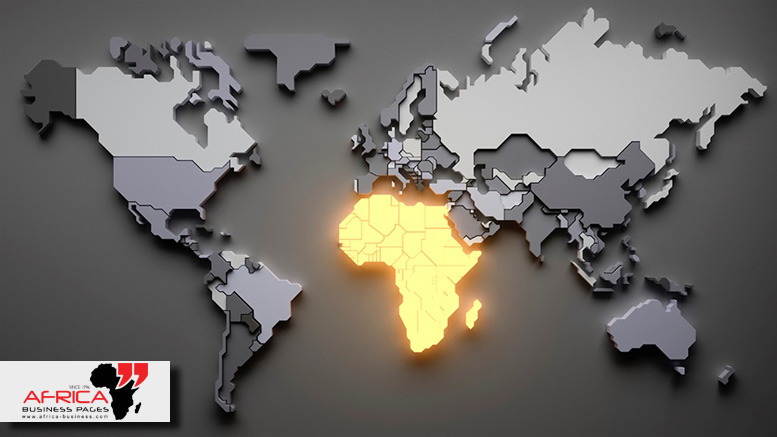
A surge in population, rapid urbanisation, the adoption and absorption of new technologies, as well as the continued unlocking of abundant resources and the deepening of the continent’s financial sector are five prominent trends that are expected to propel Africa’s on-going economic reinvigoration in the next four decades.
Democracy and a vibrant free enterprise are growing, making Africa a promising emerging market.
Governments are shifting the negative international perception by improving the business climates. The
continent is known for its abundance in natural resources, which include 90 per cent of the world’s
platinum, 50 per cent of the world’s gold,70 per cent of the world’s coltan (which the majority of cell
phones around the world use) and 30 per cent of the world’s diamond reserves. It is also the second
largest and second most-populous continent.
 As the global attention shifts towards Africa and other emerging markets as centres of
future growth, experts believe business and trade will be crucial to the continent continuing to realise
its economic growth potential.
As the global attention shifts towards Africa and other emerging markets as centres of
future growth, experts believe business and trade will be crucial to the continent continuing to realise
its economic growth potential.
Sub-Saharan Africa’s population is expected to explode to 2-billion by 2050, which will result in more
than a fifth of the world population being African. As a result, Africa’s population will become much
younger and more affluent. This major demographic shift will provide an array of opportunities and
challenges, and the continent’s economic. When coupled with robust economic growth, population growth
will support the emergence of the continent’s consumer base – providing support to local firms, creating
economic opportunities, and attracting foreign investment.
More than half of Africa’s population will be living in urban areas by 2030 as the continent’s economy
continues to advance. By 2050, more than 60 per cent of the 2 billion people expected at the time will
be urbanised. This means that 800-million Africans will either migrate to or be born in urban areas in
the next four decades. African urban household incomes are more than double rural incomes.
Mobile phone subscriptions, internet and social media usage in Africa are expected to continue to surge
to record levels in the next five years as the continent’s people vigorously embrace communication
technologies. The availability and affordability of mobile and broadband services can, as it already has
in key markets, support economic growth and provide one of the means through which will fuel Africa’s
human capital advantage.
With food expected to become the “new oil” of the 21st century, Africa’s agricultural output is set for
explosive growth in coming decades as the continent’s largely untapped potential gains elevated
attention.
While Africa is known for its dominant share in a number of core commodities, such as platinum, chrome
and cobalt that are in great demand, agriculture is also expected to feature prominently as a key driving force in the continent’s resurgence.
In the near future, Africa’s agricultural fortunes are poised for a big change. There could be a
doubling in African agricultural output within the next decade.
Urbanisation and rising incomes are bringing more people in reach of financial institutions, and, in so
doing, giving a formal identity to swathes of the continent’s young and aspirant population. Meanwhile,
technology and pioneering innovative business strategies are allowing the financial sector unprecedented
reach.
All in all, Africa’s businesses are becoming increasingly attractive for local and foreign investors – and as a result, Africa’s traditionally illiquid stock markets are growing, and private equity funds are elevating in both size and stature.
A recent survey identified 17 African countries that will offer attractive Foreign Direct Investment (FDI) opportunities in the next five years.
East Africa
Ethiopia
Rwanda
Democratic Republic of Congo
Kenya
Tanzania
Uganda
Southern Africa
South Africa
Angola
Mauritius
Mozambique
Zambia
West Africa
Nigeria
Ghana
Senegal
North Africa
Egypt
Morocco
 These attractions are underpinned by good governance and sound macroeconomic policies.
As a result of these positives, Morocco is expected to attract significant amounts of FDI over the next
five years, with the expected focus of FDI inflows being in labour-intensive industries, such as tourism
and construction.
These attractions are underpinned by good governance and sound macroeconomic policies.
As a result of these positives, Morocco is expected to attract significant amounts of FDI over the next
five years, with the expected focus of FDI inflows being in labour-intensive industries, such as tourism
and construction.
