

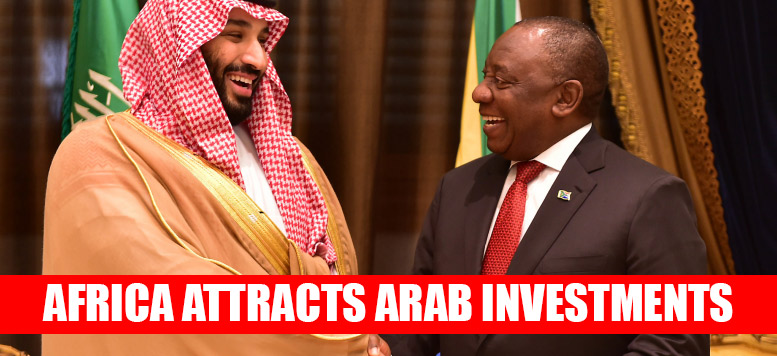
The massive accumulation of capital in the oil-rich countries of the Middle East has resulted in Arab investors aggressively spreading their portfolios across North and Sub-Saharan Africa. In search of the high-growth returns that are becoming increasingly difficult to secure in saturated Western markets, Gulf sovereign wealth funds and private conglomerates have identified Africa as the ultimate investment frontier.
Armed with substantial disposable liquidity, banks and financial institutions from the Arabian Gulf have executed numerous joint ventures, mergers, and mega-acquisitions across the continent. These deals are backed by capital surpluses and robust international loans secured by high-value holdings in the Gulf. “Many of these regional companies are generating immense cash returns,” notes a leading Dubai-based financial researcher. “They are rapidly outgrowing their domestic markets and are looking toward Africa’s demographic dividend for expansion.”
Latest Economic Developments
In 2025 and 2026, the nature of Middle Eastern investment in Africa underwent a profound "geoeconomic turn." While earlier decades saw capital funneled primarily into telecommunications and luxury real estate, today’s massive Foreign Direct Investment (FDI) is targeted squarely at critical infrastructure, renewable energy, and supply chain logistics. The six states of the Gulf Cooperation Council (GCC) have collectively poured over $100 billion into the continent over the last decade, stepping in to bridge Africa's estimated $150 billion annual infrastructure funding gap. A standout example of this aggressive new strategy is the UAE’s staggering $24 billion acquisition of the development rights for the Ras El-Hekma megaproject in Egypt, spearheaded by the Abu Dhabi-based holding company ADQ.
Furthermore, Gulf states are heavily targeting Africa's critical minerals and agricultural sectors to secure their own supply chains for the post-oil era. Saudi Arabia and the UAE have signed historic, multi-billion-dollar deals to secure stakes in copper, cobalt, and lithium mines in Zambia and the Democratic Republic of the Congo (DRC), essential for the global electric vehicle (EV) revolution. By aligning these strategic investments with the new African Continental Free Trade Area (AfCFTA), Arab investors are actively helping to build pan-African industrial networks that elevate local manufacturing while securing immense long-term returns.

Top 5 Arab Countries Investing in Africa
(Decade Cumulative)
Historical Foundations: Property & Tourism
The groundwork for this modern investment boom was laid in the early 2000s through ambitious property and tourism ventures. Rapid growth in the South African tourist sector initially attracted groups like Dubai-listed IFA Hotels & Resorts, which invested heavily in the Zimbali Coastal Resort and the Zanzibar Beach Hotel.
Similarly, global real estate giants such as Emaar Properties and Dubai Holding historically unveiled multi-billion-dollar schemes to transform the Moroccan tourist industry with residential developments across Rabat, Marrakesh, and Casablanca. In Egypt, Emaar built the massive Uptown Cairo project and developed luxury resorts along the Mediterranean coast, reflecting the Gulf's long-standing commitment to building its international portfolio through African real estate.

Telecommunications: Connecting the Continent
The initial wave of Arab investment also fundamentally accelerated the creation of a connected African market. Few pioneers were more emphatic about creating a continental brand than Mobile Telecommunications Company (MTC)—now known as Zain—which famously acquired the Netherlands-based operator Celtel for $3.4 billion to dominate the African cellular market.
“Building a pan-African brand lay at the core of our early strategy,” noted industry executives at the time. Because Africa’s colonial borders rarely reflect true economic or linguistic relations, massive inter-country traffic created incredible opportunities for telecom operators willing to establish cross-border links.
Gulf-backed companies poured billions into markets like Tanzania, Nigeria, and Angola to build infrastructure from scratch. This early capital influx catalyzed a telecom war with South African giants like MTN, ultimately resulting in the highly mature, mobile-money-driven digital economy that defines the African continent today. Despite the inherent risks of operating in historically volatile markets, Middle Eastern investors proved the skeptics wrong, laying the foundation for an economic partnership that continues to flourish and diversify today.
Did You Know?