

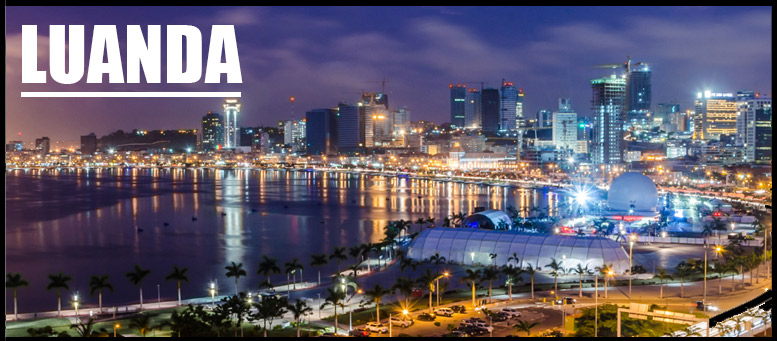
Angola has transformed dramatically over the past two decades, transitioning from a devastating civil war into one of Sub-Saharan Africa’s premier oil-driven economies. Following the historic 2002 peace deal, the nation embarked on a massive, internationally funded reconstruction program. Today, Angola boasts a rapidly modernizing economy, a prominent regional diplomatic profile, and a capital city, Luanda, that serves as a bustling hub for international investment.
The physical transformation of the country has been immense. Oil revenues and infrastructure loans have bankrolled ambitious national projects, completely overhauling the network of roads, airports, bridges, hospitals, and schools. Once-productive agricultural fields have been cleared and revitalized, while historic industries like coffee and cotton are seeing a modern resurgence.
Latest Economic Developments
Following a robust recovery in 2024 with real GDP growth reaching 4.4 percent, Angola's macroeconomic outlook into 2026 remains resilient. The government is successfully consolidating macroeconomic stability under IMF-supported frameworks, steadily reducing the public debt-to-GDP ratio while simultaneously increasing critical health and social spending. Furthermore, recent monetary policy adjustments have streamlined liquidity management and successfully eased inflation, creating a far more predictable and secure environment for foreign direct investment.
The energy sector continues to be the backbone of this expansion. In early 2026, Azule Energy identified roughly 500 million barrels of oil in Block 15/06, injecting immense confidence into the offshore exploration market. Major upcoming developments, such as TotalEnergies' $6-billion Kaminho deepwater project—slated to begin production in 2028—ensure that Angola remains a world-class frontier for energy production. Concurrently, the state-owned Sovereign Wealth Fund (Fundo Soberano de Angola) is aggressively deploying capital into domestic infrastructure and hospitality, ensuring that oil profits actively diversify the economy and secure the nation's post-petroleum future.

Angola Real GDP Growth - Overview
Urban Expansion and Global Trade
Luanda is a city characterized by intense, rapid development and stark economic contrasts. Driven by the tide of petrodollars surging into the port, real estate costs in the capital remain some of the highest globally. High-end, multi-million-dollar residential and commercial high-rises dominate the skyline, catering to an influx of expatriates and international executives. To address the resulting housing disparity, the government is currently rolling out massive, subsidized urban renewal projects to upgrade infrastructure and sanitation in the sprawling informal settlements surrounding the urban core.
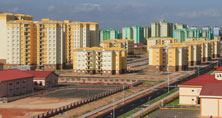
China remains one of the primary partners in Angola’s rapid development, guaranteeing extensive infrastructure construction in exchange for petroleum production. Today, Angola stands as the second-largest oil producer in Sub-Saharan Africa and is the premier supplier to China. However, global superpowers and investors from Europe, Asia, and the Middle East are also increasingly flocking to Angola, eager to establish footprints in telecommunications, retail, and agro-processing as the market steadily liberalizes.
To accommodate this massive influx of global business, Luanda’s aviation and port infrastructure has been fundamentally transformed. International carriers are scaling up operations, linking Angola directly to major global transit hubs and effectively opening the doors for unprecedented cross-border commerce.
Did You Know?