
Bagader Trading
Tyres, tubes and batteries. Largest stockist of Chinese, Indian and Indonesian Tyres, Korean Tubes and Batteries and a leading exporter of tyres to Africa from Dubai...



Africa presents great opportunities in the telecom sector. The
liberalisation of the sector, the extension of services
by multinational conglomerates and the active competition
currently in place in the sector have all contributed
to the telecom revolution. Since the processes of liberalisation
and privatisation have been taken into consideration by
African countries such as Uganda, Tanzania, 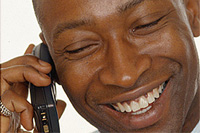 Nigeria,
the Sudan, South Africa and Kenya, their telecommunication
infrastructures have improved drastically. Many African
governments have developed their telecommunication infrastructure
by privatising their former state-owned enterprises.
Nigeria,
the Sudan, South Africa and Kenya, their telecommunication
infrastructures have improved drastically. Many African
governments have developed their telecommunication infrastructure
by privatising their former state-owned enterprises.
As a result, the telecom sector in the African secor has
opened up new vistas of business opportunities. Africa
has been the fastest-growing mobile market in the world
during the past five years. There are now more than 82
million mobile users in Africa: Nigeria's mobile market
is growing at over 100% per year. Mobile telephony has
a positive and significant impact on economic growth,
and this impact may be twice as large in developing countries
as in developed countries.
That
mobile phone use is growing faster in Africa than anywhere
else shouldn't come as much of a surprise, given a moment's
thought. Only 6 per cent of African citizens owned a mobile
phone in 2004, so as prices drop (and low-cost phones
made for the developing world come to market), there's
a huge potential market available. In Asia, North America
and Europe, conversely, mobile phone use approaches saturation,
so any remaining growth will be far slower.
Tyres, tubes and batteries. Largest stockist of Chinese, Indian and Indonesian Tyres, Korean Tubes and Batteries and a leading exporter of tyres to Africa from Dubai...

Complete range of automobile spare parts, tyres, batteries and lubricants available for the tough, demanding driving conditions of Africa. A-MAP is one of the leading exporters of automobile spare...

Complete range of automobile spare parts, tyres, batteries and lubricants available for the tough, demanding driving conditions of Africa. A-MAP is one of the leading exporters of automobile spare...

Exedy Middle East FZCO manufactures a complete range of clutch and transmission solutions for a wide range of automobiles and machinery. Exedy clutches are in high demand in Africa...

Gifts, Novelties and Promotional Material supplier. Watches, Bags, Key Chains, Desktop accessories, Pen Sets, Gift Items... Wanted business partners in Africa...

Competitively priced tyres of almost all well known brands like Advance, Double Happiness, GT, Double Ox, Hankook etc. BBG Trading is a major exporter to African markets...

Distributor for Scania in the United Arab Emirates since 1981, has been registering a healthy growth in demand for genuine spare parts for trucks, buses and marine and industrial engines

Spare parts for all kinds of heavy machinery and equipment. Represents Hyster, Grove, Bobcat, Perkins, Massey Ferguson, Deves, Ausa, Sullair...

Manufacturer of quality soaps, cosmetics and toiletries for international markets and a leading exporter of beauty products and toiletries to Africa...

Manufacturer of quality steel furniture in Dubai - Steel Desks, Steel Filing Cabinets, Steel Cupboards, Steel Lockers, Steel School Furniture etc...

New Al Dhaid Furniture L.L.C. (NAD) offers a comprehensive range of home and office furniture and has emerged as a leading exporter to the African markets...

Ajmals has produced a special line of perfumes for the African markets. MARYAJ, a special range of budget-priced perfumes has already become popular with African customers...

Specialised supplier of kitchen equipment for hotels, restaurants and cafés. Seeking importers of kitchen equipment in Africa and buyers in African markets...

Everhot STAINLESS STEEL Water Heaters are much better than the conventional glass-lined water heaters as their inner tank is made from stainless steel...

Full range of Truck Chasis for all uses as well as standard and luxury buses and forklifts from 1 to 7 tons, with diesel, gasoline, LPG and battery operating systems...

One-stop source for all tractor and diesel engine parts in Dubai. Seeks business partners and wholesalers in Africa to further increase its client base in Africa...

Manufacturer of all kinds of plastic, paper and packaging materials. Seeks importers in Africa of packaging materials as well as cleaning chemicals...

Manufacturers of Fire Extinguishers, Fire Fighting Equipment and related products and equipment. Wholesale inquiries from Africa welcome. Distributors wanted...

Asimco is a leading manufacturer of premium friction products including brake pads, brake shoes, fuel pumps, brake fluids, disc rotors and shock absorbers...
